
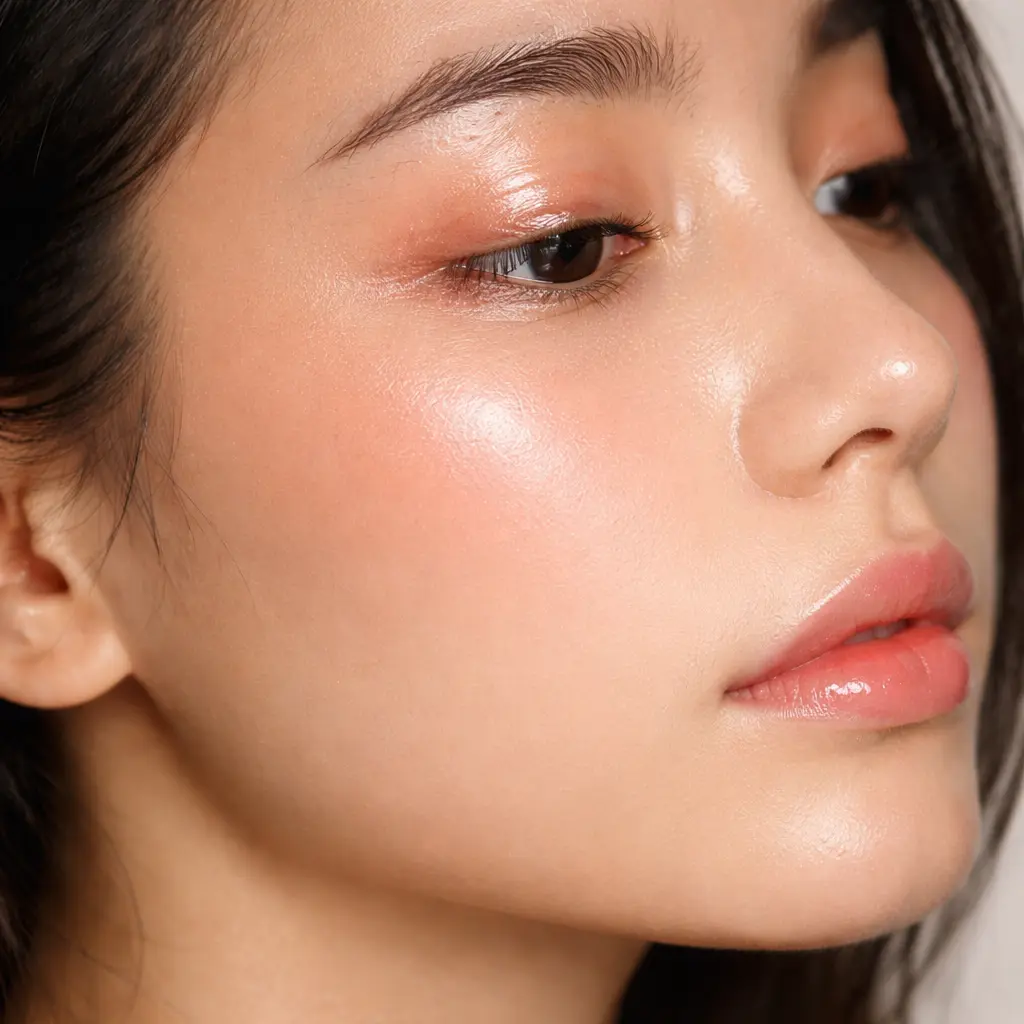
Jelly makeup looks perfect on screen. Skin appears plump, light reflects softly, and everything feels fresh in a way that almost looks effortless. It’s easy to understand why this style keeps coming back as a trend.
Jelly makeup usually refers to glossy, gel-like textures that sit on the skin to enhance light and create a plump, dewy appearance—an effect that reads beautifully in photos and short videos.
But in real life, the experience can feel very different.
What looks dewy and healthy on camera often turns into something uncomfortable after a few hours—sticky, heavy, or distracting in ways you didn’t expect. And for many people, that disconnect isn’t about application skills or product quality. It’s about how jelly textures behave once they leave controlled lighting and enter everyday life.
The Appeal of Jelly Textures
Jelly makeup is designed to hold light.
That’s the entire point.
Soft, gel-like formulas stay closer to the surface of the skin, catching highlights and creating the illusion of moisture and bounce. Under bright or diffused lighting, this reads as healthy, youthful skin—especially when movement is minimal.
The problem is that this same texture doesn’t disappear once the camera is gone.
Why It Feels Different in Real Life
The moment you step into a normal day—walking outside, sitting in warm rooms, moving your face naturally—the qualities that made jelly makeup look appealing can start to feel intrusive.
Stickiness becomes noticeable when there’s friction: hair touching the face, hands adjusting glasses, masks, or simply resting your chin on your palm. What felt lightweight at first starts to demand attention.
It’s not that jelly makeup is “bad.”
It’s that it was never designed to be invisible.
Environment Matters More Than We Think
Jelly makeup performs best in environments that don’t exist for most people all day.
Cool temperatures, minimal movement, and controlled humidity allow gel-based textures to stay comfortable. In contrast, crowded spaces, warmer rooms, and long wear times amplify every sensory detail.
That’s why a look that feels fine for an hour can become tiring by mid-afternoon.
Skin Type Plays a Role—but It’s Not the Whole Story
It’s easy to blame skin type, but even people with dry or balanced skin report the same discomfort with certain jelly finishes. The issue isn’t oil production alone—it’s how long a product remains perceptible on the skin.
When makeup doesn’t fully settle, you stay aware of it. And that awareness breaks the illusion of effortlessness that jelly makeup promises.
Why Preferences Are Quietly Shifting
More people are moving away from high-presence finishes—not because they look bad, but because they feel demanding.
Comfort is becoming part of what “good makeup” means.
That shift doesn’t require abandoning glow entirely. It simply means choosing textures that soften the look without constantly reminding you they’re there.
If you’ve found yourself gravitating toward simpler, more comfortable makeup lately, that change usually isn’t accidental:
https://getbeauty.net/natural-korean-makeup
Final Thoughts
Jelly makeup isn’t a mistake or a failed trend.
It does exactly what it’s meant to do—just not always in the contexts we wear it.
Understanding why it feels great in theory but distracting in practice explains why many people are rethinking how much glow they actually want in their everyday routines.
The difference isn’t about trends.
It’s about how makeup fits into real life.
Written by Hana Lee — A beauty reviewer exploring K-beauty and global beauty through makeup, skincare, fragrance, fashion, and how they come together in real-life settings.