
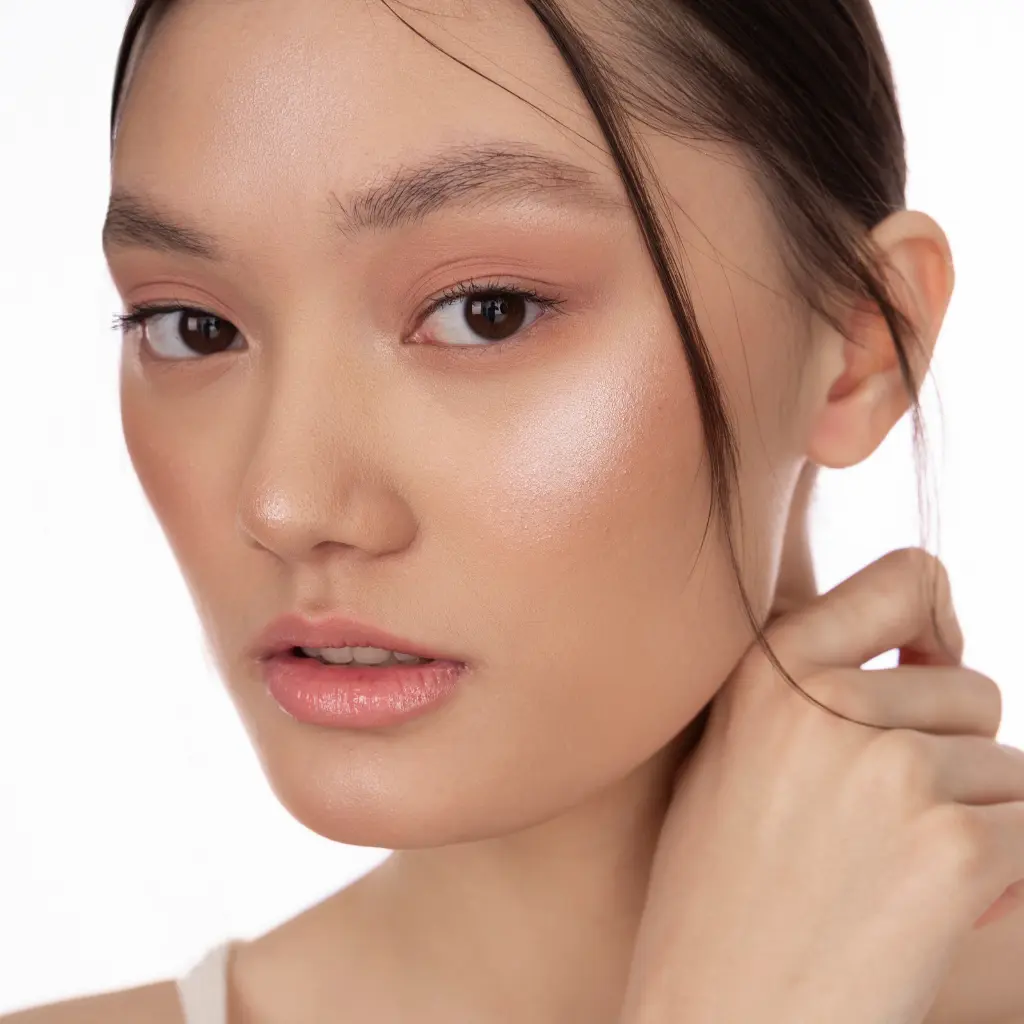
This post explains where to apply jelly makeup so it feels comfortable and looks fresh in real life.
Once you start paying attention to how it actually feels throughout the day, it becomes clear that some areas benefit from jelly textures far more than others.
This isn’t about technique or trend.
It’s about placement—and knowing where jelly makeup enhances your look versus where it quietly becomes uncomfortable.
For a deeper breakdown of how jelly makeup textures behave on skin and what makes some formulas feel lighter than others, this guide explains the texture side in more detail:
https://getbeauty.net/jelly-makeup-texture-guide/
This post focuses on where those textures tend to work best in real life.
Where Jelly Makeup Usually Looks and Feels Best
Cheeks (Upper Cheek Area)
Jelly textures tend to perform best on the upper cheeks, especially when applied closer to the cheekbone rather than the center of the face.
This area:
- Moves less throughout the day
- Benefits visually from a soft, hydrated sheen
- Is less likely to come into contact with masks, hair, or clothing
When people say jelly makeup looks fresh and effortless, this is usually the area they’re reacting to.
Lips (Center-Focused Application)
On lips, jelly textures feel most comfortable when they’re concentrated toward the center rather than layered edge to edge.
This placement:
- Keeps the finish glossy without feeling heavy
- Reduces transfer at the corners of the mouth
- Feels intentional rather than sticky
It’s less about full coverage and more about controlled shine.
High Points of the Face
The bridge of the nose or the high points above the cheekbones can also work well with jelly textures, as long as application stays light.
These areas:
- Naturally catch light
- Don’t experience much friction
- Enhance the “glassy” look without relying on heavy product
In small amounts, jelly finishes here tend to feel invisible once set.
Where Jelly Makeup Often Feels Uncomfortable
Around the Mouth
This is one of the most common problem areas.
Because the mouth moves constantly, jelly textures here tend to:
- Shift throughout the day
- Emphasize stickiness
- Feel noticeable even when the product looks fine
It’s often the first place where jelly makeup stops feeling pleasant, even if it still looks good.
Jawline and Lower Face
The lower face comes into frequent contact with hands, collars, and hair.
Jelly textures in this area can start to feel mobile rather than settled.
Visually, the glow may still work—but the comfort usually doesn’t last.
Under the Eyes
Although it’s tempting to add glow under the eyes, jelly textures here often feel heavier than expected.
This area is:
- Sensitive
- Prone to creasing
- Easily irritated by formulas that don’t fully set
Even lightweight jelly products can feel distracting here after a few hours.
How to Adjust Without Changing Products
If you already own jelly-style products, the solution isn’t necessarily replacing them.
Small placement adjustments often make the biggest difference:
- Focus jelly textures on areas with less movement
- Keep mobile areas more controlled
- Treat glow as a highlight, not a base
Jelly makeup tends to feel best when it’s used selectively rather than everywhere at once.
The Takeaway
Jelly makeup isn’t an all-or-nothing trend.
It works best when you treat it as a targeted texture, not a universal finish.
Once you start thinking in terms of placement instead of application, the glassy look becomes easier to wear—and much easier to live with.
Written by Hana Lee — A beauty reviewer exploring K-beauty and global beauty through makeup, skincare, fragrance, fashion, and how they come together in real-life settings.