
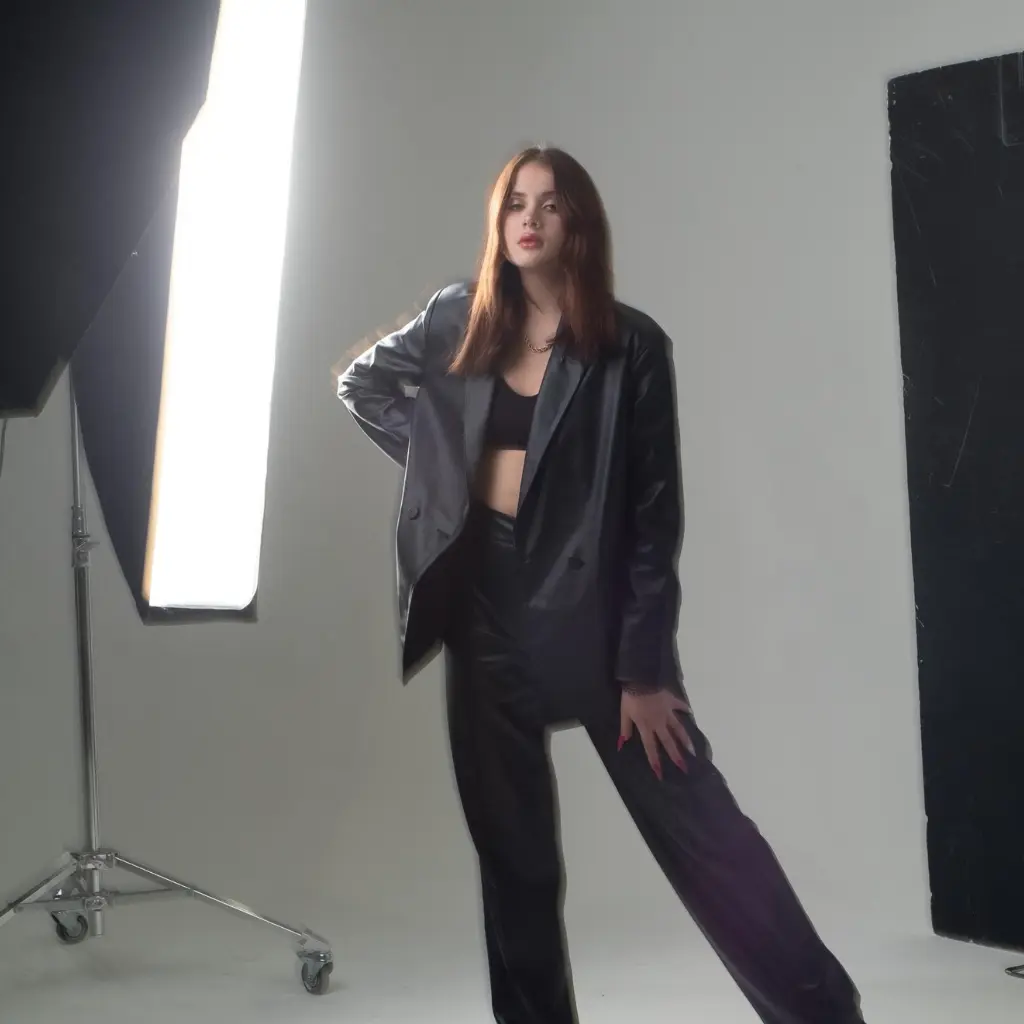
Makeup can look flawless in photos and still feel off in real life.
Same face, same products, same routine—yet the result doesn’t translate the way you expected.
That gap usually isn’t about skill. It’s about context.
Makeup behaves differently depending on light, distance, and movement, and real life rarely matches the conditions a camera creates.
In the previous article,
Why Makeup Looks Good in Photos but Not in Real Life,
I explained how cameras simplify texture and reshape contrast. Today is the next step: how to adjust your thinking—and your makeup—for everyday life.
Why photo-ready makeup often feels too much in person
Makeup designed for photos is built for very specific conditions:
strong, directional lighting; a fixed distance; and a mostly still face.
Under those rules, definition needs to be clear and color needs to read from far away. That’s why contour looks crisp, blush looks intentional, and skin appears smoother on camera. The same makeup, viewed up close in uneven light, can suddenly feel sharp or heavy.
That isn’t a mistake. It’s a different set of expectations.
In real life, balance matters more than perfection
Faces in real life move. Light shifts. People see you from different distances and angles. In that environment, makeup doesn’t need to be perfectly defined everywhere—it needs to hold together as a whole.
What often works best off-camera:
- softer edges instead of sharp lines
- one feature taking the lead instead of everything competing
- a finish that looks comfortable up close, not just impressive from afar
Makeup that seems “less” in photos often reads better in person.

Image courtesy of Pexels
Adjusting makeup isn’t about wearing less—it’s about changing the frame of reference
The common advice is to “just apply less.” Quantity helps, but it’s not the point.
The real shift is understanding what the makeup was designed for:
- camera lighting versus everyday light
- being seen from a distance versus up close
- stillness versus movement
If that frame of reference doesn’t change, cutting back alone won’t fully solve the problem.
This is the same mindset shift I wrote about in
How My Beauty Standards Changed in 2025.
When the reference point changes, your idea of what looks “right” changes with it.
Why this matters even more when you look at celebrity makeup
Most celebrity makeup you see—red carpets, stage performances, editorials—is created for controlled lighting and cameras. It’s meant to read clearly from a distance and survive intense conditions.
That’s why copying it directly can feel wrong in daily life.
What actually helps is asking:
- What environment was this makeup created for?
- What elements are meant to be seen from far away?
- Which details can be softened or rebalanced for real life?
This way of thinking turns celebrity looks from something to copy into something to interpret.
When makeup works in real life, it doesn’t announce itself
Makeup that works well off-camera rarely gets praised as “perfect.”
Instead, it makes the face look settled, comfortable, and cohesive.
It doesn’t demand attention. It supports the person wearing it.
That’s not a compromise—it’s a different goal.
In the next article, I’ll start applying this framework to real examples, including stage and celebrity makeup, and show how those looks can be adapted realistically instead of copied literally.
Understanding the conditions comes first. Everything else follows.
Written by Hana Lee
A beauty reviewer exploring K-beauty and global beauty through makeup, skincare, fragrance, fashion, and how they come together in real-life settings.