
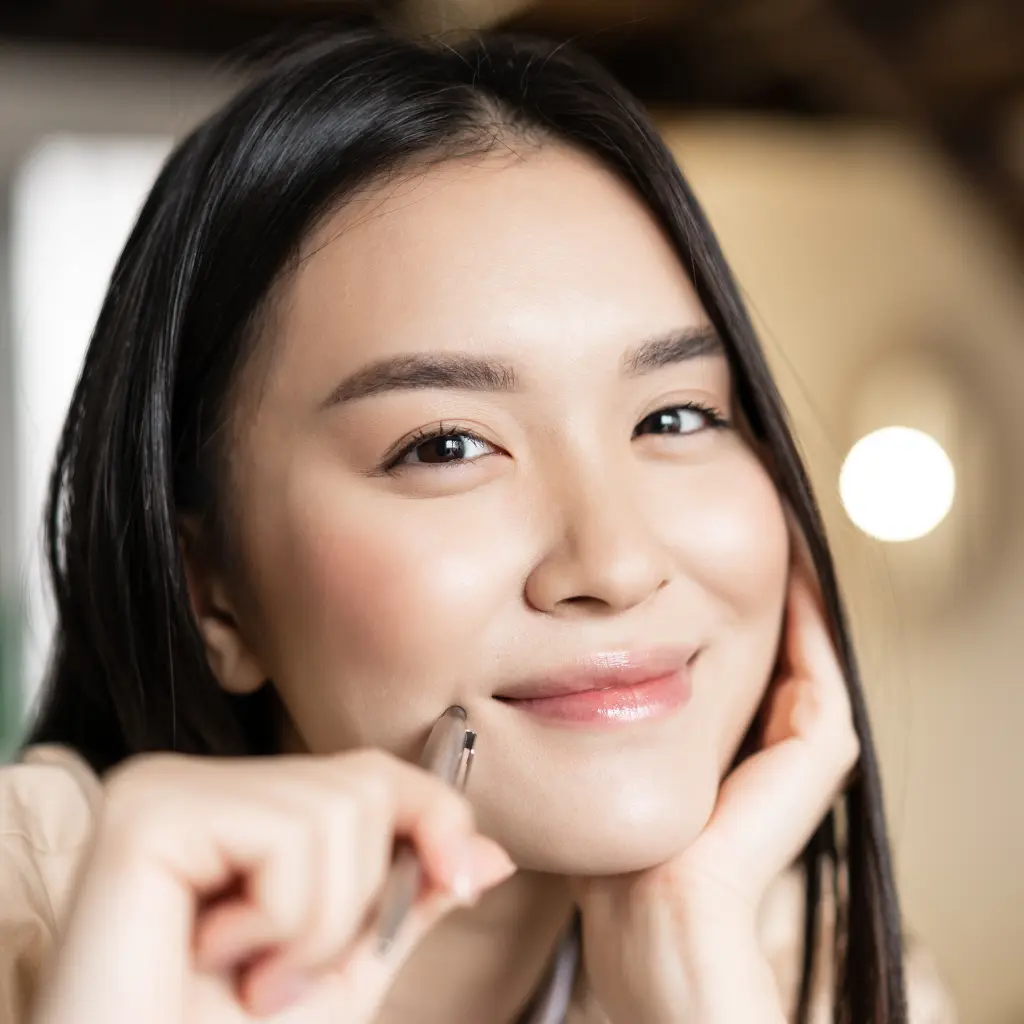
K-drama makeup often feels effortless. Skin looks calm, eyes feel soft, and nothing seems overdone—yet everything reads beautifully on camera.
That’s not an accident. K-drama makeup is designed for a very specific viewing environment, and once you understand that context, the look makes a lot more sense.
This isn’t about copying products or techniques. It’s about understanding why the makeup works on screen—and why it can feel different in real life.
The Lighting K-Dramas Are Built Around
Most K-dramas are filmed in controlled, diffused lighting. Even scenes that appear to be “natural daylight” are carefully shaped to avoid harsh shadows.
That lighting softens:
- skin texture
- color contrast
- fine lines and edges
As a result, makeup doesn’t need to be heavy to show up. Light base makeup, muted blush, and softly defined eyes all register clearly under these conditions.
This is very different from environments with strong overhead lights or direct sunlight, where makeup needs more structure to stay visible.
Camera Distance Changes Everything
K-drama makeup is created with close-up shots in mind.
The camera is often just a few feet away, capturing subtle expressions rather than dramatic angles.
That’s why:
- eyebrows are softly filled, not sharply defined
- contour is minimal or blended into the base
- lip colors stay close to natural tones
Up close, bold makeup can look distracting. Softness reads as realism—and realism is the goal.
If this feels familiar, it connects closely to how makeup behaves differently on camera versus everyday life, which I broke down in more detail here:
https://getbeauty.net/camera-vs-real-life-makeup/
Why Skin Looks “Perfect” Without Looking Heavy
One of the most noticeable things about K-drama makeup is the skin. It looks smooth, even, and calm—but rarely thick.
That effect comes from:
- thin, well-prepped base layers
- finishes that reflect light gently, not aggressively
- minimal powder, especially in the center of the face
Under soft lighting, reflective skin appears healthy rather than shiny. In everyday indoor lighting, that same finish can sometimes look oily or uneven—simply because the environment has changed.
Why This Look Feels Hard to Recreate in Real Life
Many people try to recreate K-drama makeup exactly as they see it on screen, then feel disappointed when it looks flat or unfinished at home.
The issue isn’t skill—it’s context.
Real life usually involves:
- mixed lighting
- wider viewing distances
- movement instead of static close-ups
That’s why real-life makeup often needs subtle adjustments. If you’re curious how to translate screen-based makeup into something that works better day to day, this guide goes deeper into that shift:
https://getbeauty.net/how-to-adjust-makeup-for-real-life/
The Bigger Picture: Makeup Is Always Context-Driven
K-drama makeup isn’t “better” than everyday makeup.
It’s just designed for a different environment.
Once you stop treating screen makeup as a universal standard, it becomes easier to:
- appreciate it for what it is
- adapt the parts that actually work for you
- let go of unrealistic expectations
Understanding the environment—lighting, camera distance, and intention—matters more than copying any single technique.
That perspective is what makes makeup feel intentional rather than frustrating.
Written by Hana Lee — A beauty reviewer exploring K-beauty and global beauty through makeup, skincare, fragrance, fashion, and how they come together in real-life settings.