
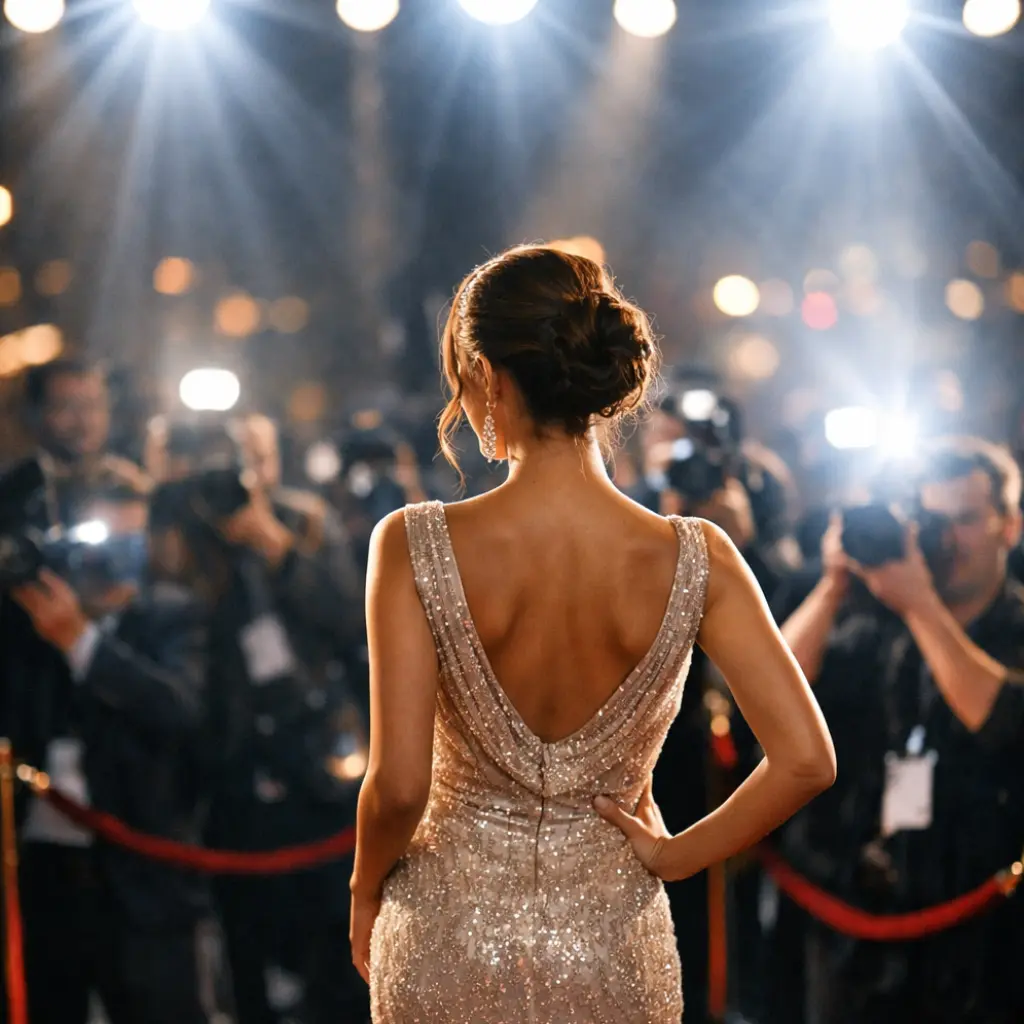
When we see red carpet photos, makeup always looks flawless.
Skin appears smoother, contours sharper, and colors more refined than they ever seem in everyday life.
But when similar makeup techniques are applied outside that context, the result often feels heavy or out of place.
That difference isn’t about skill or product quality.
It exists because red carpet makeup is designed for a completely different environment.
Red carpet makeup isn’t built for natural light, casual conversation distance, or daily movement.
It’s built for cameras.
The Red Carpet Is a Lighting Environment, Not a Place
On the red carpet, makeup artists work under conditions most people never experience:
- Intense spotlights from above and the front
- Repeated flash photography
- Strong contrast between highlights and shadows
- Multiple cameras capturing faces from different angles at once
In this environment, subtle makeup disappears.
Coverage needs to be more even.
Contours must be stronger.
Blush and bronzer need enough intensity to survive harsh lighting.
What feels excessive in real life often looks perfectly balanced once a camera is involved.
Why Camera-Focused Makeup Feels Heavy in Real Life
If you’ve ever tried recreating a red carpet look and felt uncomfortable afterward, it’s not because you did it wrong.
It’s because the context changed.
Camera-focused makeup is designed to compensate for:
- Loss of depth caused by flash
- Flattening effects from lenses
- Overexposure that washes out detail
Once those conditions are removed, the same techniques can feel sharp, matte, or overly structured.
This disconnect is why celebrity-inspired makeup so often feels disappointing when worn day to day.
I explored how makeup needs to shift once it leaves the camera and enters real life in more detail here:
https://getbeauty.net/how-to-adjust-makeup-for-real-life/
Flash Photography Doesn’t Reveal Skin — It Reinterprets It
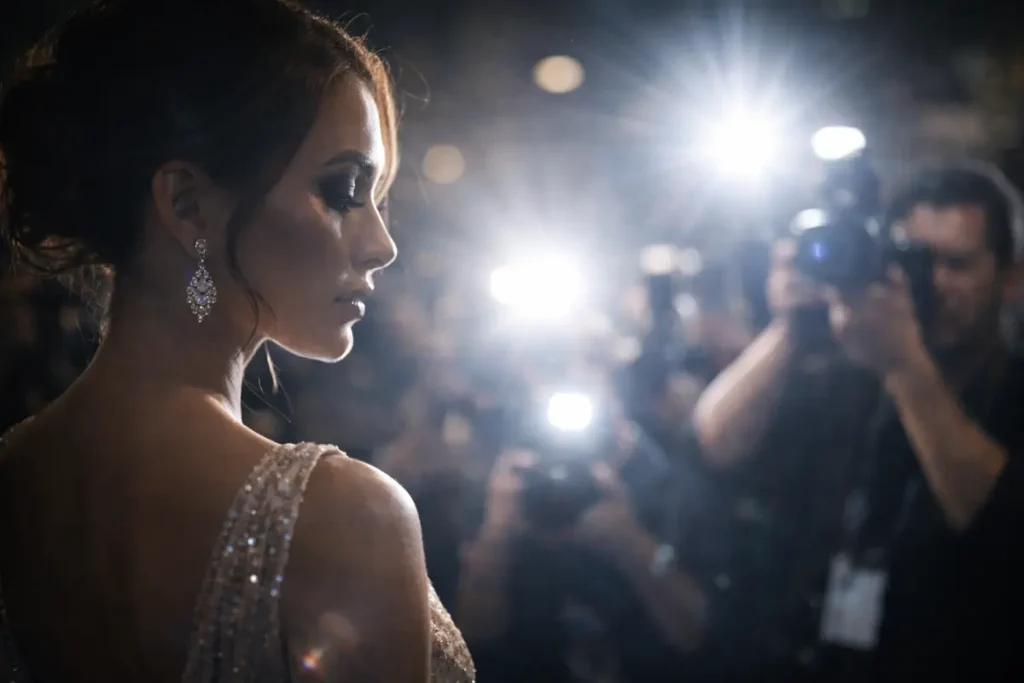
Flash doesn’t simply brighten the face.
It changes how skin is read.
Texture becomes less visible.
Shine is exaggerated.
Subtle color transitions flatten.
That’s why red carpet makeup often appears more matte, more set, and more contoured than expected.
Up close, these choices can feel harsh.
On camera, they restore balance.
Stage Makeup Follows the Same Logic
This approach isn’t exclusive to Hollywood.
K-pop stage makeup operates under similar rules — powerful lighting, distance from the audience, and constant camera movement all require makeup to be more graphic than natural.
That’s why stage makeup often looks softer in person than it does in photos or videos.
If you’re curious how this plays out under performance lighting, this breakdown explains why idol makeup translates differently off stage:
https://getbeauty.net/k-pop-idol-makeup-stage/
Different industries, same principle.
Makeup adapts to the environment it’s meant to be seen in.
What to Borrow From Red Carpet Makeup — and What to Adjust
The issue isn’t taking inspiration from celebrity makeup.
It’s copying it without interpretation.
What’s worth borrowing:
- Thoughtful skin preparation
- Intentional structure
- Strategic placement
What usually needs adjustment:
- Coverage level
- Contour depth
- Overall finish
Red carpet makeup isn’t wrong.
It’s simply specific.
Once you stop treating it as an ideal and start seeing it as a camera solution, it becomes much easier to make choices that work in real life.
Final Thought
Celebrity makeup isn’t designed to make everyday faces feel inadequate.
It’s designed to perform under conditions most people never encounter.
Understanding that difference doesn’t lower standards.
It gives you control.
Written by Hana Lee —
A beauty reviewer exploring K-beauty and global beauty through makeup, skincare, fragrance, fashion, and how they come together in real-life settings.